
Seattle’s Pet Sheltering Plan in 2025: How It Stacks Up to National Best Practices, and Where It Falls Behind
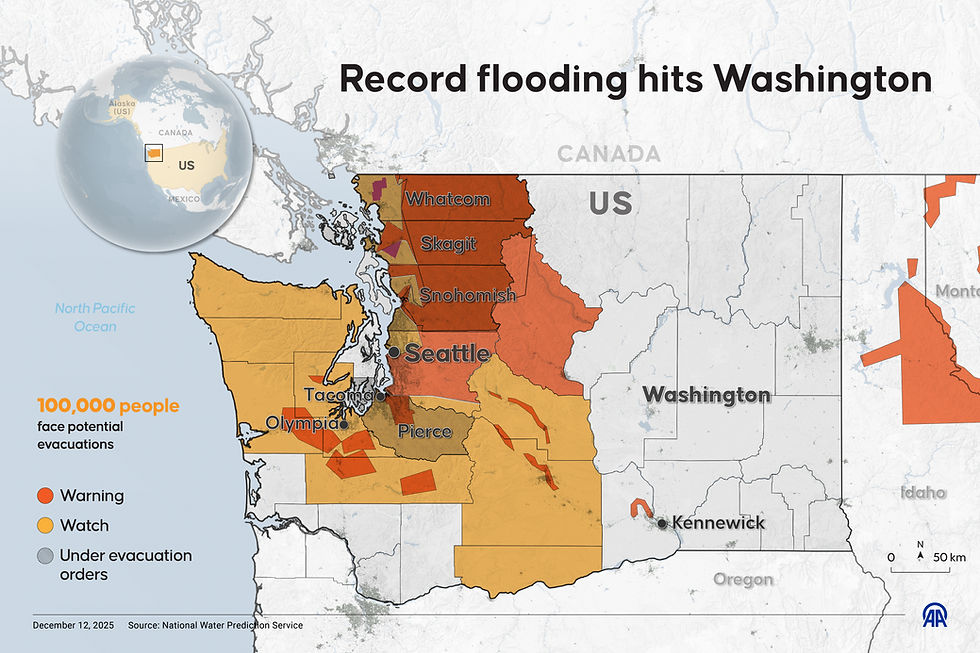
Washington State is entering its second week of back-to-back atmospheric rivers. Communities across the region face severe flooding, power outages, and infrastructure collapse. And while Seattle has so far escaped the worst, the storms continue, and each new weather event tests our emergency readiness.
Because pets profoundly shape evacuation behavior, a city’s emergency response plan must recognize that animal planning is human planning. This was a central lesson after Hurricane Katrina and remains a core principle of modern disaster preparedness.
Seattle’s Pet Sheltering Plan, last updated in 2022, outlines how the City will evacuate, shelter, and care for animals during disasters. But how well does it match today’s national best practices, and the risks we face in 2025?
Below, we walk through the plan’s strengths, gaps, and opportunities for modernization.
Estimating Pet Needs: Seattle’s Numbers Are Outdated
The City’s plan estimates the number of pets expected to accompany evacuees using 2007 AVMA household pet-ownership calculations and FEMA-era assumptions about evacuation behavior. For example, it models scenarios where 0.5–20% of household evacuees bring pets, with space requirements based on 10 square feet per large carrier.
National best practices recommend using the AVMA’s 2022 Pet Ownership & Demographics Sourcebook, which includes dramatically updated national pet-ownership trends: 44.5% of households own dogs and 25.4% own cats, substantially higher dog ownership estimates than 2007.
Seattle’s human population has grown since 2022, meaning the number of pets in the City have grown along with them. Additionally, the National Alliance of State Animal and Agricultural Emergency Programs (NASAAEP) recommends agencies recalculate population estimates every 3-5 years, so Seattle is due for an update now.
Underestimating emergency animal volume carries significant risk, affecting emergency shelter size, staffing, and supplies.
Responsible Agencies: Broad Coalition, Limited Clarity
Seattle’s plan lists more than 20 agencies and organizations, from the Seattle Animal Shelter (SAS) to the Washington State Animal Response Team (WASART), as partners in disaster response. On paper, this reflects an impressively broad coalition. In practice, however, national best practices emphasize that listing partners is not the same as securing commitments.
Organizations such as the Federal Emergency Management Agency (FEMA), the National Alliance of State Animal and Agricultural Emergency Programs (NASAAEP), and the National Animal Care & Control Association (NACA) recommend that jurisdictions maintain signed Memoranda of Understanding (MOUs) with each named partner. These MOUs should define roles, deployment triggers, resource expectations, and communications protocols.
Seattle’s plan does not indicate whether MOUs are maintained for most of the agencies it names. Rather, it states that these MOUs will be established during specific phases, such as preparation. Without documented commitments, the City risks discovering gaps in resources or personnel during an emergency, one of the most common coordination failures identified in national after-action evaluations.
Three Emergency Response Pathways: Strong Framework, Uneven Readiness
Seattle outlines three methods of caring for animals during disasters: co-located shelters, supplemental shelters, and feed-in-place support. This tiered approach aligns with national standards, but implementation readiness varies significantly across the three pathways.
Co-Located Pet Shelters: Aligned With Best Practices, but With Constraints
Co-located arrangements, where pets are housed near their owners at Red Cross shelters, are now widely recognized as best practice because they reduce abandonment and improve compliance with evacuation orders. Seattle’s plan provides detailed procedures on intake, sanitation, crate setup, owner responsibilities, and daily care. These are all strong components and align with NACA and American Red Cross guidelines.
However, several of Seattle’s pre-identified co-location sites lack sufficient ventilation separation, heating, or flexible space, conditions that NASAAEP and Red Cross standards emphasize as core to safe co-located sheltering. The City has the right model, but limited facilities restrict its resilience.
Supplemental Shelters: A Good Start Without the Required Preparedness Work
Seattle’s supplemental options, such as large warehouses, garages, and rescue-organization facilities, provide necessary overflow capacity if SAS reaches its limits. This is a strength; many cities lack a second tier of sheltering options altogether.
But national best practice requires that overflow sites be pre-approved, annually evaluated, and fully assessed for utilities, structural safety, and operational feasibility. Several of Seattle’s identified sites (e.g., Hangar 30 or community buildings used as storage) lack heating, earthquake retrofitting, or defined staffing plans. As a result, Seattle may have identified locations, but not verified that they could actually operate during an emergency.
Feed-In-Place Care: Forward-Thinking but Underdeveloped
Seattle stands out for planning a “feed-in-place” strategy, delivering food to owners sheltering in place and supporting pets left behind after hospitalization, evacuation, or death. This strategy emerged nationally after COVID-19 and is increasingly recommended for pandemics, long-duration events, or large-scale infrastructure disruption.
But feed-in-place response requires:
Trained Community Animal Response Teams (CARTs),
Standardized safety and PPE protocols,
Permission processes for entering private property, and
Legal and liability guidance.
Seattle’s plan lists volunteers broadly but does not outline CART-equivalent teams, training requirements, or safety rules. These execution protocols are critical to making this strategy come to life and are missing.
Phase-by-Phase Planning: Solid Structure, Missing Modernization
Seattle divides disaster operations into five phases, Preparation, Alert, Response, Recovery, and Demobilization, consistent with the National Incident Management System (NIMS) and Incident Command System (ICS).
Preparation Phase: Good Foundations, Outdated Tools
Seattle’s preparation activities include interagency communication plans, NIMS/ICS training, annual resource inventories, and the identification of shelter sites. These align well with FEMA’s recommended preparedness cycle.
Where Seattle falls behind is in modernization. Leading agencies now incorporate:
Digital intake and tracking systems,
Reunification databases,
Microchip look-up integrations,
GIS mapping of animal pickups,
QR-coded forms and cloud-based document storage.
Seattle is a well known tech city, yet its plan contains none of these tools, relying entirely on manual, paper-based workflows that are difficult to scale or coordinate during large incidents.
Alert Phase: Clear Protocols, Lacking Activation Triggers
The plan correctly identifies that the Emergency Operations Center (EOC) activates during the Alert phase and that communications shift to consistent, centralized messaging. The structure is appropriate and aligned with NIMS.
What is missing is explicit activation triggers, which NASAAEP and FEMA consider essential.
Many jurisdictions establish trigger points tied to:
National Weather Service (NWS) alerts,
River-level thresholds,
Expected storm duration or severity,
Cascading infrastructure failure (e.g., predicted long-duration outages).
Without predefined triggers, activation risks becoming reactive rather than anticipatory.
Response Phase: Seattle’s Strongest Area
The Response phase is operationally detailed and aligns closely with NACA, FEMA Disaster Assistance Policy 9523.19 (Household Pets and Service Animals), and NASAAEP functional guidance. Seattle’s plan outlines:
Check-in and registration processes,
Required owner agreements,
Daily care logs,
Zoonotic risk protocols,
PPE usage,
Abandoned animal procedures,
Overflow and transport decision-making.
This is Seattle’s most robust and nationally aligned portion of the plan.
Where improvement is still needed is in digital tracking, which is now standard at large municipal shelters during disasters. Paper forms complicate reunification and slow down EOC situational reporting.
Recovery and Demobilization: Solid Guidelines, Missing Metrics
Seattle’s plan outlines appropriate steps for reunification, managing stray hold periods, handling bite cases, and completing after-action reviews. These are all consistent with national standards.
However, best practice now calls for jurisdictions to track specific performance metrics, such as:
Reunification rates,
Average length of stay,
Volunteer-to-animal ratios,
Incidents of zoonotic exposure,
Number of animals requiring emergency veterinary care.
Seattle does not identify any metrics or success indicators, making performance evaluation and continuous improvement difficult.
Summary of Strengths and Gaps Compared to National Best Practice
Seattle’s Pet Sheltering Plan demonstrates strong operational detail and genuine intent, particularly around co-located sheltering and disaster-phase structure. But emergency management standards and best practices are rapidly evolving and the plan has not kept pace with advancements in technological readiness, partner agreements, or site preparedness.
The result is a plan with a solid foundation, but one that urgently needs updated population estimates, digital systems, facility evaluations, and clearly defined interagency commitments.
Seattle has the opportunity to lead in this space. Updating the plan now, before the next atmospheric river becomes the next emergency, would protect families, safeguard animals, and strengthen the City’s climate resilience.
Sources:
Pet_20Sheltering_20plan_Seattle_CIremoved.pdf
https://www.avma.org/resources-tools/reports-statistics/us-pet-ownership-statistics
https://www.avma.org/resources-tools/avma-policies/avma-policy-animal-disaster-planning
https://www.congress.gov/bill/109th-congress/house-bill/3858
https://nasaaep.org/wp-content/uploads/2020/11/NASAAEP-Sheltering-Guidelines.pdf
https://www.redcross.org/get-help/how-to-prepare-for-emergencies/mass-care-sheltering.html
https://www.redcross.org/get-help/how-to-prepare-for-emergencies/pet-disaster-preparedness.html


